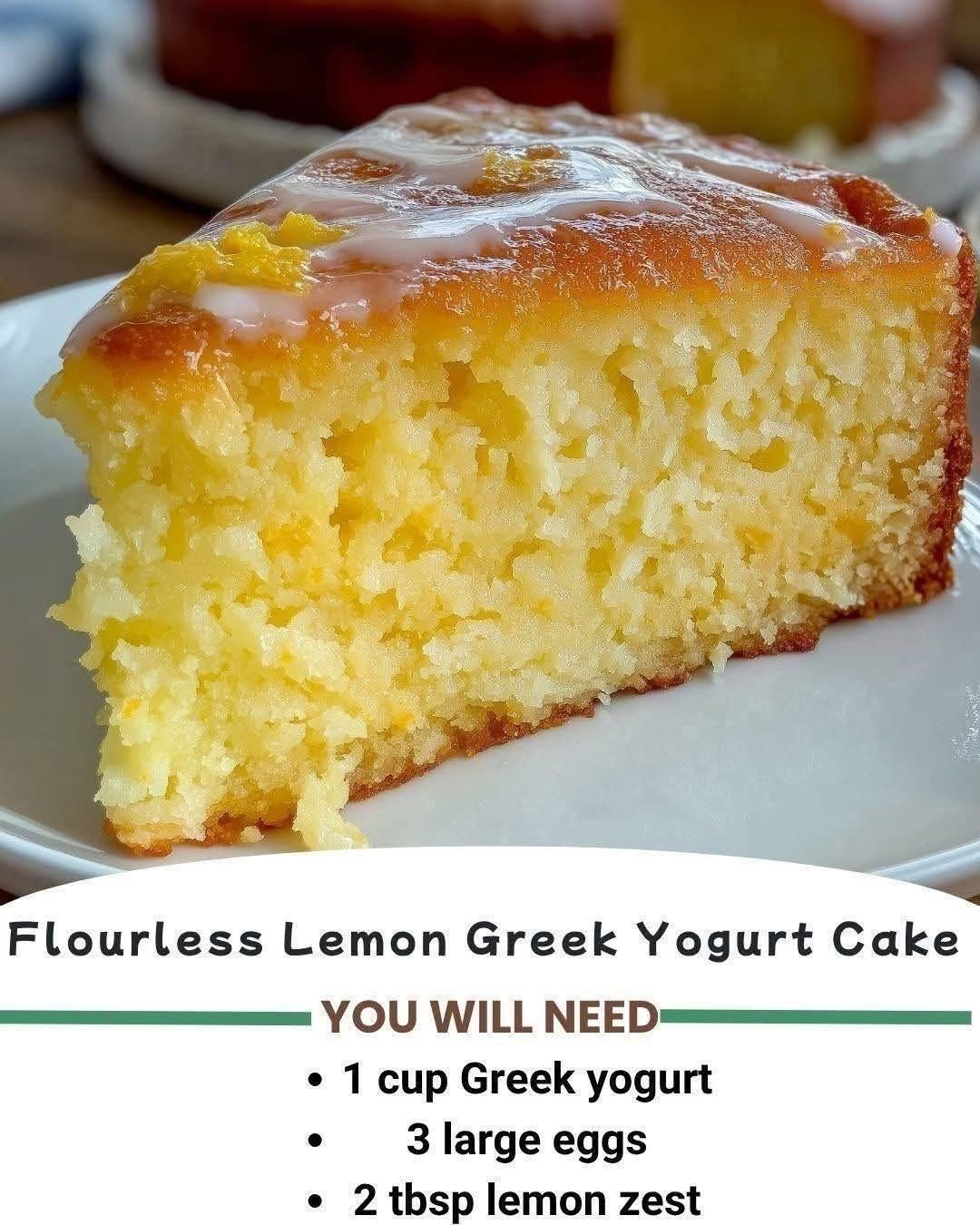
Flourless Lemon Greek Yogurt Cake
This stunning Flourless Lemon Greek Yogurt Cake is a masterclass in texture, proving that you do not need traditional wheat flour to create a dessert that is extraordinarily rich, moist, and luxurious. By utilizing whole citrus fruits and protein-packed Greek yogurt, this cake achieves a dense yet velvety crumb reminiscent of a classic flourless torte, but with a vibrant, sun-drenched citrus brightness. It is naturally gluten-free, relies on wholesome ingredients, and delivers an unforgettable balance of tart lemon zing and creamy richness.
The Science and Magic of Flourless Citrus Cakes
Baking without traditional flour requires a shift in how you think about structure in the kitchen. In standard baking, gluten provides the scaffolding that holds a cake together. In a flourless cake, structural integrity comes from alternative binders, primarily whole eggs and specialized ingredients like almond flour.
The Citrus Base: Rather than just using juice and zest, this recipe utilizes whole boiled citrus fruits or blended citrus elements that provide moisture, natural pectin, and intense flavor. For a more accessible home-baking approach, this recipe leans heavily on fresh lemon juice, heavy lemon zest, and almond flour as the primary dry base.
Almond Flour as a Structural Agent: Finely ground blanched almond flour is high in natural oils and protein. When baked, these oils keep the cake intensely moist for days—preventing the dryness often associated with gluten-free baked goods—while providing a rich, subtle nuttiness that complements the tartness of the lemon.
Greek Yogurt’s Role: Full-fat Greek yogurt introduces a high concentration of dairy proteins and acidity. The acidity reacts gently with the leavening agents to give the cake a subtle lift, while the fat content guarantees a melt-in-your-mouth crumb structure.
Ingredients
For the Cake:
Blanched Almond Flour: 2.5 cups (finely ground, packed lightly) – ensure you use almond flour, not coarse almond meal, for a smooth crumb.
Full-Fat Greek Yogurt: 1 cup (plain, preferably 5% milk fat for maximum richness and moisture)
Granulated Sugar or Coconut Sugar: 3/4 cup – sweetens the batter just enough to balance the aggressive tartness of the fresh lemon.
Large Eggs: 4 large room-temperature eggs – act as the primary structural binder and leavening agent as they whip up.
Fresh Lemons: 3 large lemons (yielding approximately 1/3 cup of fresh lemon juice, plus 2 tablespoons of freshly grated lemon zest)
Baking Powder: 1.5 teaspoons (aluminum-free)
Baking Soda: 1/2 teaspoon
Fine Sea Salt: 1/2 teaspoon
Pure Vanilla Extract: 1.5 teaspoons
Unsalted Butter or Coconut Oil: 2 tablespoons, melted (optional, for an extra touch of richness)
For the Lemon Glaze (Optional):
Confectioner’s (Powdered) Sugar: 1 cup
Fresh Lemon Juice: 2 to 3 tablespoons
Lemon Zest: 1 teaspoon (for garnish)
Equipment Needed
8-inch or 9-inch springform pan or round cake pan
Parchment paper
Large mixing bowls
Whisk and rubber spatula
Electric hand mixer or stand mixer (helpful for whipping the eggs)
Microplane zester
Citrus juicer
Wire cooling rack
Step-by-Step Instructions
Phase 1: Preparation and Oven Setup
Preheat your oven: Adjust your oven rack to the middle position and preheat the oven to 175°C (350°F).
Prepare the pan: Lightly grease your 8-inch springform pan or round cake pan with butter or oil. Line the bottom with a round piece of parchment paper, and lightly grease the paper as well. This guarantees that your delicate flourless cake will release cleanly without sticking or breaking apart.
Bring ingredients to room temperature: Ensure your eggs and Greek yogurt are at room temperature. Cold ingredients can cause the melted fats to seize and will prevent the eggs from trapping air effectively during mixing.
Phase 2: Mixing the Wet Base
Zest and juice the lemons: Using a microplane, carefully grate the outer yellow skin of your lemons, avoiding the bitter white pith underneath, until you have about 2 tablespoons of zest. Cut the lemons in half and squeeze to yield 1/3 cup of fresh juice. Set aside.
Whisk eggs and sugar: In a large mixing bowl, combine the 4 large eggs and the granulated sugar. Using an electric hand mixer or a whisk, beat the mixture on medium-high speed for about 3 to 4 minutes until it becomes pale yellow, thick, and slightly frothy. This step is crucial because incorporating air into the eggs helps give the dense almond flour batter a gentle lift.
Incorporate yogurt, oil, and vanilla: Whisk the full-fat Greek yogurt, melted butter (or coconut oil), pure vanilla extract, fresh lemon juice, and lemon zest directly into the whipped egg mixture until completely smooth and uniform.
Phase 3: Incorporating the Dry Ingredients
Whisk dry components: In a separate medium bowl, whisk together the finely ground blanched almond flour, baking powder, baking soda, and fine sea salt. Ensure there are no large lumps of almond flour by breaking them up with a fork or whisk.
Combine wet and dry: Gently pour the dry almond flour mixture into the wet Greek yogurt and egg mixture. Using a rubber spatula, fold the ingredients together gently using a circular scraping motion.
Avoid overmixing: Mix only until the dry flour disappears and a thick, glossy batter forms. Overmixing can lead to a dense, heavy texture rather than a tender, crumbly cake.
Phase 4: Baking to Golden Perfection
Pour into the pan: Transfer the batter into your prepared cake pan. Use your spatula to smooth the top into an even layer, gently tapping the pan against the counter once or twice to release any trapped air bubbles.
Bake: Place the cake in the preheated 175°C (350°F) oven. Bake for 35 to 45 minutes. Because almond flour browns faster than wheat flour, check the cake around the 30-minute mark; if the top is browning too quickly, loosely tent a piece of aluminum foil over the top for the remainder of the baking time.
Test for doneness: Insert a wooden toothpick or cake tester into the absolute center of the cake. It should come out clean or with a few moist crumbs attached, but no wet batter. The edges should be golden, and the center should be set with a slight spring when pressed gently.
Cooling process: Remove the cake from the oven and place it on a wire cooling rack. Let it cool inside the pan for 15 minutes—this allows the structure to firm up safely. Afterward, run a thin knife around the edges, release the springform ring (or gently invert onto the rack if using a standard pan), remove the parchment paper, and let it cool completely to room temperature.
Phase 5: Glazing and Serving
Mix the glaze: In a small bowl, whisk together the powdered sugar and 2 tablespoons of fresh lemon juice until smooth and pourable. If it feels too thick, add an extra half-teaspoon of lemon juice; if too thin, add a tablespoon more powdered sugar.
Drizzle: Once the cake is completely cool, drizzle the bright lemon glaze over the top, letting it drip naturally down the sides. Sprinkle the reserved fresh lemon zest over the glaze for a pop of color and aroma.
Slice and serve: Slice the cake cleanly using a sharp knife wiped clean between cuts. Serve plain, or pair with a dollop of fresh whipped cream and fresh berries.
Pro-Tips for Success
Choosing Almond Flour: Always use blanched almond flour (made from peeled almonds). Unblanched almond meal contains dark flecks of skin that will disrupt the smooth, bright yellow aesthetic of a lemon cake and yield a heavier texture.
Storage and Longevity: Because of the high moisture content from the Greek yogurt and almond oils, this cake actually tastes better on the second day as the flavors meld. Store it covered in the refrigerator for up to 5 days. Bring it to room temperature for 15 minutes before serving for the best texture.
Freezing: This cake freezes exceptionally well. Wrap individual unglazed slices tightly in plastic wrap and store them in a freezer-safe bag for up to 2 months. Thaw overnight in the refrigerator before enjoying.
